
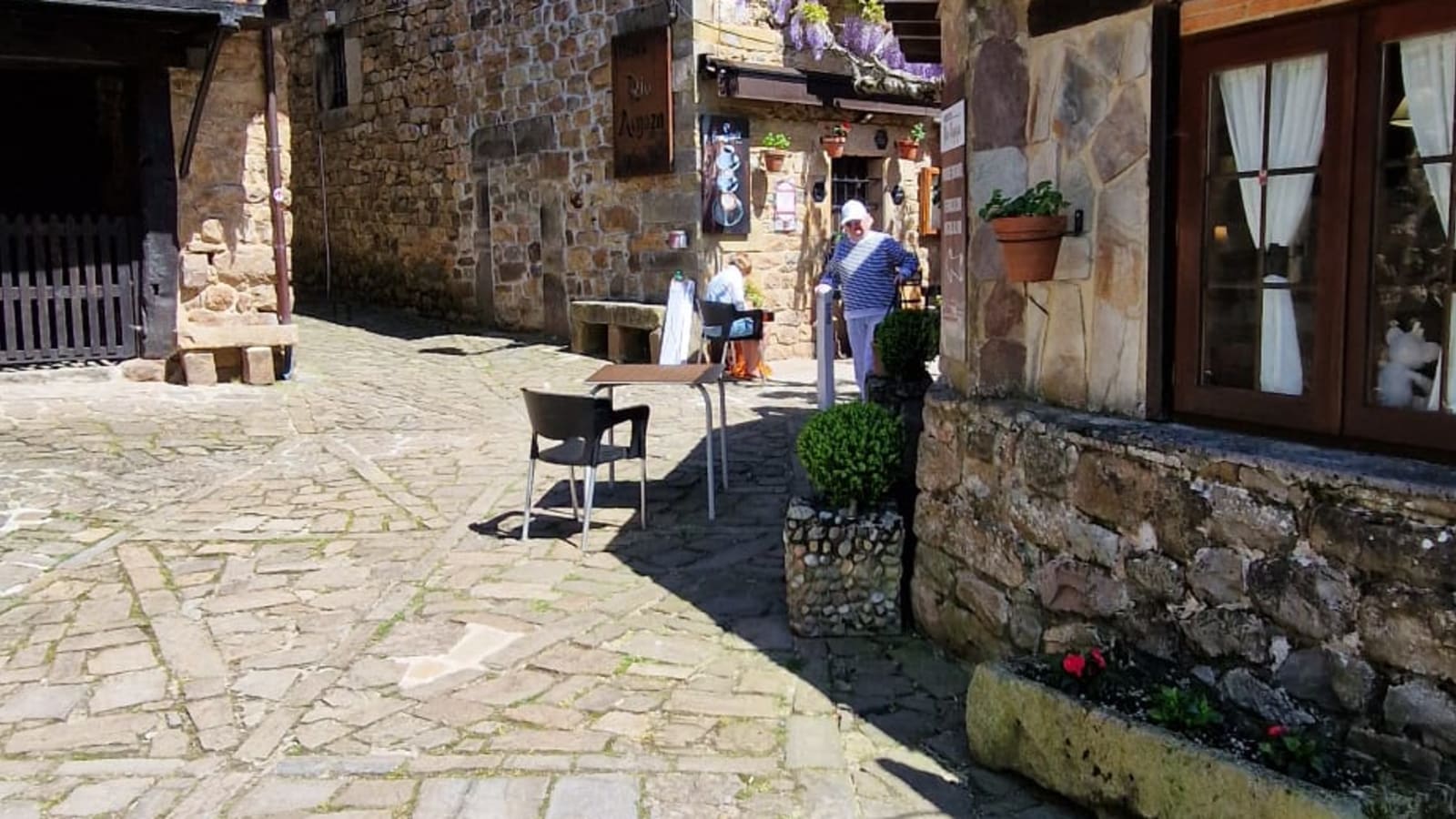
What is half board in Spain? At Casa Agara you get more
If you want a half board holiday in Spain where a lot is genuinely included, here's the plain version. At Casa Agara, an 18th-century hosted casona in the Cabuérniga valley of Cantabria (the green, Atlantic north, not the Costas), you get more than half board: breakfast every morning, a light lunch and a home-cooked dinner every evening, with vegetables from the garden. And, unusually, the house wine, beer and spirits are poured all day, on the house. So your everyday drinks are in the price too.
What does half board actually mean here?
Half board is the old hotel term for two meals a day: breakfast and dinner. You get both, cooked in the house. Breakfast sets you up before you head out. Dinner is a proper sit-down affair in the evening, around the table, with much of it grown in the garden a few steps away. Casa Agara goes further, because lunch is included too: a light lunch at the house on quiet days, or a picnic to carry with you if you're out walking or riding. Most guests are out walking, at the beach or in a village by the middle of the day anyway, so it suits the rhythm of the place. Rob and María do the hosting and the cooking, and Chispa the house dog supervises.
Why are the drinks included — what's the catch?
There isn't much of one. The house wine, beer and spirits are poured throughout the day, and you're not running a tab or counting glasses. It's the everyday house pour rather than a sommelier's list, which is exactly why it can be included without a fuss. If you fancy a particular special bottle you can ask, but for a glass of wine with dinner or a beer after a walk, it's simply there. That's unusual for a half board holiday, where drinks are normally the line on the bill that quietly grows.
So what do you actually pay for once you're there?
Day to day, less than you'd think. Walking from the door into the Saja-Besaya reserve costs nothing. What you'll spend on is entry fees for places you choose to visit, any activities you add (a surf lesson, a ride, that sort of thing), and lunch out if the group fancies a local restaurant, since lunch at the house or a picnic is already covered. The Altamira caves (you see the Neocueva replica, and you must book ahead) and Gaudí's El Capricho at Comillas have their own admission. Beyond that it's souvenirs and the occasional treat. The bones of the week are settled before you arrive: bed, breakfast, lunch, dinner and the bar.
Do solo travellers pay a single supplement?
There's no forced single supplement, which is the honest way to put it. You can come on your own or as a couple and join a scheduled per-person hosted week; many of these run with Spice Escapes, a UK operator (ATOL 9046 covers flight-inclusive packages). If you'd rather not pay for a room to yourself, you can twin-share: Spice pairs you with a same-sex room-mate at no extra charge, and if no match is found, they cover the room supplement themselves. Prefer your own room? That's an optional supplement. We'll confirm the exact terms and figures for the week you choose, so you're never guessing. Travelling solo is entirely normal here, too — ABTA's Holiday Habits research found around 19% of British holidaymakers took a solo trip in the past year, a record, and growing fastest among the under-45s.
What if we want the whole house to ourselves?
That works differently. A group can bring their own party and take the entire casona, with the same arrangement looking after everyone: breakfast, lunch, dinner and the house bar included, so nobody's totting up rounds. It suits families, walking groups and get-togethers who'd rather not share the place with strangers.
Where is it, and how do I get there?
Casa Agara sits in Fresneda de Cabuérniga, inside the Saja-Besaya nature reserve, in Green Spain. Surf beaches are about 40 minutes away and beginner-friendly at any age; the Picos de Europa are roughly an hour off for their fringes and viewpoints; Santillana del Mar is about 20 minutes. It's around an hour from Santander airport, with direct UK flights from Stansted, Manchester and Edinburgh.
Fancy a week where the meals and the drinks are already sorted? Tell us what you're after, and we'll walk you through it — get in touch.